
Beginner's Guide to Setting Sail in Coastal Waters
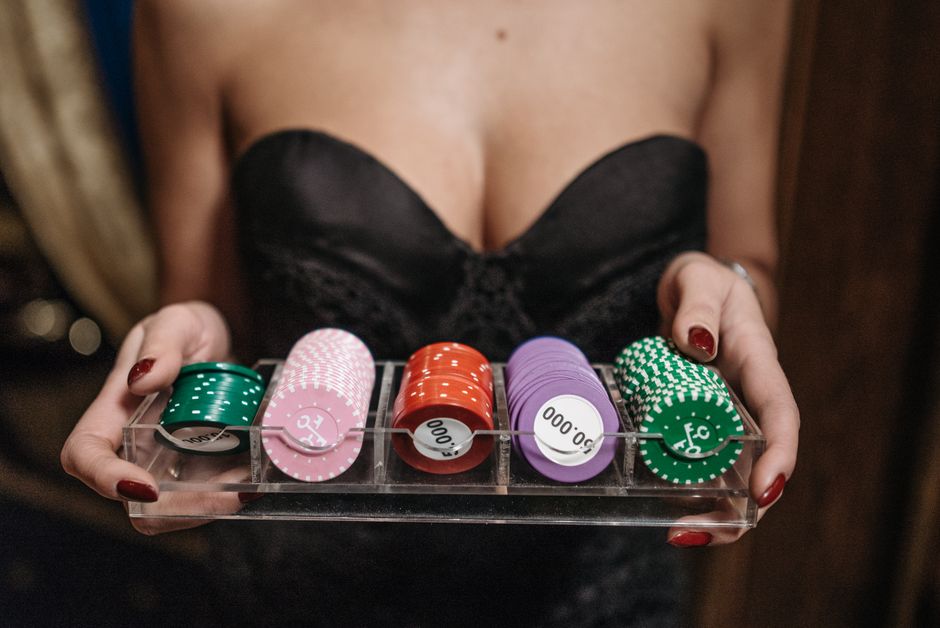
You sit down at a virtual blackjack table, heart rate steady, mind clear. You've got a strategy. But then the dealer flips an ace, you hit, bust, and suddenly you're chasing losses you swore you'd never chase. What just happened? It wasn't bad luck. It was your brain, wired over millennia to respond to uncertainty, novelty, and near-misses in ways that modern iGaming exploits with surgical precision. Understanding that wiring isn't just academic—it's the difference between playing smart and playing broke.
In this article, we'll pull back the curtain on the psychological mechanics that make casino games, sports betting, slots, and poker so compelling. More importantly, we'll show you how to spot the traps and tilt the odds back in your favour.
Why Near-Misses Hurt So Good
Ever spun a slot and seen two cherry symbols line up with a third just a hair above the payline? That's a near-miss, and it's one of the most powerful tools in a game designer's arsenal. Brain imaging studies show that near-misses activate the same reward circuits as actual wins—just enough dopamine to keep you pulling the lever. The result: you feel like you're "close" to a jackpot, even though each spin is independent and the odds haven't changed one bit.
Land-based slots have used this for decades, but online slots have refined it. Games like Starburst or Gonzo's Quest feature expanding wilds and avalanche mechanics that create cascading near-misses, making every spin feel like a near-win. The fix? Recognise that near-misses are entertainment, not evidence. If you find yourself thinking "I'm due," that's the trap talking.
The Variable-Ratio Schedule: The Engine of Addiction
Psychologist B.F. Skinner discovered that the most persistent behaviours come from variable-ratio reinforcement—rewards given after an unpredictable number of actions. That's exactly how slot machines and scratch cards work. You don't know how many spins it'll take to win, so you keep spinning. Compare that to a fixed-ratio schedule (e.g., a free bet after every 10 wagers), which produces steady but easily extinguished behaviour. The unpredictability is what hooks you.
- Sports betting: A 5-leg parlay is a variable-ratio monster. You might hit one in 20, but the payout is huge. The near-misses (4 out of 5 legs) keep you coming back.
- Poker: Bad beats are variable-ratio punishments that make you chase losses. You remember the one time your 2-7 offsuit cracked aces, not the 20 times it folded.
- Blackjack: The illusion of skill (basic strategy) masks the fact that outcomes are still random. You attribute wins to skill and losses to bad luck—a classic self-serving bias.
To counter this, set strict loss limits before you play. Use the deposit limits offered by licensed operators—they exist for a reason.
Tilt: The Silent Bankroll Killer
In poker, "tilt" is emotional confusion that leads to suboptimal play. It happens after a bad beat, a string of losses, or even a big win that makes you feel invincible. Online, tilt is amplified: no physical tells, no dealer to slow the game, just rapid-fire decisions. A 2019 study in the Journal of Gambling Studies found that online poker players on tilt were 3 times more likely to make -EV (negative expected value) calls. It is also worth checking B52 CLUB before deciding.
How to spot tilt in yourself:
- Rapid betting: You're clicking "raise" or "spin" without thinking.
- Chasing losses: You increase bet size to win back what you've lost.
- Ignoring bankroll rules: You dip into funds set aside for rent or bills.
- Physical signs: Clenched jaw, shallow breathing, sweaty palms.
The fix is simple but hard: when you notice any of these, stop. Take a 15-minute break. Walk away from the screen. The game will still be there.
Slots: The Master of Illusion
Slot machines are the most profitable product in any casino, online or off. Why? Because they combine everything: flashing lights, celebratory sounds, near-misses, and variable-ratio payouts. Modern video slots also use "losses disguised as wins" (LDWs)—when you bet $1, win $0.80, but the machine plays a winning jingle. Your brain registers a win, even though you lost money. Over time, this erodes your bankroll while keeping you emotionally engaged.
Take Book of Dead, a hugely popular slot. Its free spins feature triggers roughly once every 200 spins. During those spins, the expanding symbol can pay big, but the base game has an RTP (return to player) of 96.21%—meaning the house edge is 3.79%. That's not terrible, but over thousands of spins, it adds up. The key is to treat slots as entertainment, not income. Set a session budget, and when it's gone, log off.
Poker: Where Psychology Meets Math
Poker is unique in iGaming because it's played against other people, not the house. That means psychology matters as much as probability. The best players exploit cognitive biases in their opponents:
- Confirmation bias: A player who thinks you're bluffing will interpret every action as a bluff.
- Anchoring: The first bet size in a hand becomes a reference point for later bets.
- Loss aversion: Players hate folding a hand they've already invested in, even when the math says fold.
Online, you can't see faces, but you can track timing tells (e.g., a quick call often means a draw) and bet-sizing patterns. Tools like HUDs (heads-up displays) track statistics, but pure psychology still wins pots. The takeaway: study your opponents' tendencies, but also study your own. Are you calling too much because you're bored? Are you bluffing because you're frustrated? Self-awareness is your edge.
Sports Betting: The Illusion of Control
Sports betting feels different because you're analysing real-world data—injuries, weather, form. That sense of control is an illusion. A 2021 study in PLOS ONE found that bettors who believed they had high knowledge of a sport were more likely to make risky bets and less likely to use odds comparison tools. In reality, the bookmaker's margin (typically 5-10%) ensures they profit long-term.
But you can reduce the house edge by:
- Line shopping: Compare odds across multiple sportsbooks. A 2% difference in odds is huge over 100 bets.
- Betting early: Lines are often softer when they first open, before the public piles in.
- Avoiding parlays: They multiply the house edge. A 5-leg parlay can have an effective margin of 20% or more.
- Using bonuses wisely: A 100% deposit match with a 10x rollover is better than a 50% match with a 30x rollover. Do the math.
Conclusion: Play the Player, Not the Game
Every casino game, every sports bet, every poker hand is designed to exploit your psychology. The house doesn't need to cheat; it just needs you to be human. That's not a reason to quit—it's a reason to play smarter. Understand near-misses, recognise tilt, respect variance, and never bet more than you can afford to lose. The most successful gamblers aren't the ones with the best systems; they're the ones who know when to walk away. Next time you log in, ask yourself: are you playing the game, or is the game playing you?
LEAVE A COMMENT