
Beginner's Guide to Setting Sail in Coastal Waters
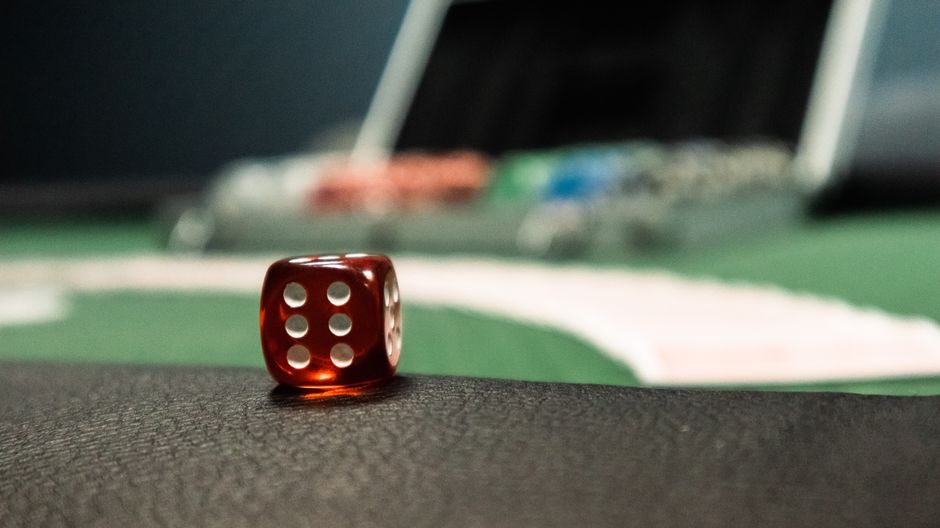
You hear it all the time: iGaming is a game of pure chance. The house always wins, the slots are random, and the cards fall where they may. But spend a week inside a serious poker room, or watch a high-stakes blackjack table, and a different picture emerges. Luck is the spark, but skill—often invisible, deeply mathematical, and endlessly refined—is the engine. The modern iGaming landscape is quietly becoming a battleground of intellect, where players who treat betting like a craft are carving out real edges in games most people dismiss as mindless fun.
This isn't about denying variance. It's about recognizing where a decision changes the long-term math. Let's break down the truth behind skill in slots, table games, and poker, and why the smartest players approach every wager with a strategy.
The Spectrum of Skill: From Slots to Poker
Not all iGaming is created equal. On one end, you have pure chance machines like most online slots. On the other, you have poker, where skill can dwarf luck over thousands of hands. In between lies an interesting middle ground: blackjack, video poker, sports betting, and even some modern slot mechanics.
Here's a rough hierarchy of skill impact:
- Minimal skill: Classic slots, keno, lottery-style games. Outcome is determined entirely by a random number generator (RNG). Your only real choice is bet size and which machine to play.
- Moderate skill: Blackjack, video poker, baccarat (if you stick to low-house-edge bets), and sports betting. Strategy and knowledge can reduce the house edge from 5% to less than 0.5% in some cases.
- High skill: Poker (Texas Hold'em, Omaha, etc.), daily fantasy sports, and certain eSports betting markets. Here, the best players consistently profit over time.
The key takeaway: if you want to apply skill, gravitate toward games where your decisions matter. But even in slots, there's a subtle art to bankroll management and game selection—more on that later. Many readers start with nowgoall.it.com when comparing options.
Slots: The Illusion of Control and the Power of Bankroll
Let's be blunt: no strategy changes the RTP (return to player) of a slot machine. If a game has a 96% RTP, the house edge is 4% over millions of spins. You can't beat that with a pattern. But you can manage it.
Skilled slot players focus on three things:
- Volatility awareness: High-volatility slots (like Bonanza or San Quentin) pay big but rarely. Low-volatility games (like Starburst) pay small but often. Choosing the right volatility for your bankroll is a skill.
- Bonus hunting: Many online casinos offer free spins, deposit matches, or cashback. Understanding wagering requirements and expected value (EV) turns these into a math problem, not a lottery.
- Session discipline: Setting win/loss limits and sticking to them. The best slot players are ruthless about walking away.
It's not glorified skill, but it's decision-making that separates a recreational player from someone who lasts. And in iGaming, longevity is everything.
Blackjack and Video Poker: Where Strategy Meets Math
This is where skill becomes tangible. In blackjack, basic strategy—a chart of optimal moves based on your hand and the dealer's upcard—can reduce the house edge to around 0.5%. Add card counting (if you can get away with it online*, which is rare), and you can theoretically flip the edge. But even without counting, just knowing when to hit, stand, double, or split makes a massive difference.
Video poker is even more fascinating. Games like Jacks or Better have a published optimal strategy. Play perfectly, and the house edge can drop to 0.46%—or even positive with certain promotions. The difference between a casual player who holds a pair of kings and a sharp who discards a low pair to chase a royal flush is thousands of dollars over a year.
Consider this concrete example: In 9/6 Jacks or Better (9 coins for a full house, 6 for a flush), the optimal strategy returns 99.54%. A player who makes just one common mistake—holding a flush instead of a four-card royal—can lose an extra 0.5% per hand. Over 10,000 hands at $1 per bet, that's $50 lost to ignorance.
Poker: The Purest Skill Game in iGaming
If you want skill to be the deciding factor, poker is your arena. Over a single session, luck rules. Over 100,000 hands, the cream rises. Why? Because every decision—fold, call, raise, bet size—has an expected value, and the player who consistently makes higher-EV choices wins.
Modern online poker is brutally competitive. But that doesn't mean you can't win. Here's what separates winning players:
- Range analysis: Thinking in terms of hand ranges, not specific cards. "What does my opponent's bet sizing tell me about their entire range?"
- Game selection: Sitting at tables with weaker players. A skilled player at a tough table might break even; the same player at a soft table prints money.
- Mental game: Tilt control, bankroll management, and volume. The best players treat poker like a business, not a gamble.
Data backs this up. In a study of 10 million hands on a major site, the top 10% of players earned a positive win rate, while the bottom 50% lost steadily. The difference wasn't luck—it was decision quality.
Sports Betting and the Rise of Analytical Edges
Sports betting has undergone a revolution. The days of gut-feel picks are fading. Today's sharp bettors use predictive models, injury reports, weather data, and line movement analysis. They hunt for value—when the odds offered are higher than the true probability.
For example, if a model says Team A has a 55% chance to win, but the sportsbook offers +150 (implied probability 40%), that's a massive edge. Consistently finding those discrepancies requires work: scraping data, building algorithms, and managing a portfolio of bets. It's not for everyone, but for those who do it, betting becomes an investment, not a lottery ticket.
Final Thoughts: Play Smart, Not Just Lucky
The future of iGaming belongs to players who respect the math. Slots will always be a spin of the wheel, but even there, discipline pays. Blackjack and video poker reward those who study. Poker and sports betting are intellectual battlegrounds where the prepared mind thrives.
So the next time you log in, ask yourself: are you playing to be entertained, or are you playing to win? Both are valid—but only one path leads to long-term profit. Choose your games wisely, learn the strategies, and never underestimate the quiet power of skill in a world that loves to call it all luck.
LEAVE A COMMENT